Easy like Friday morning

I woke up this morning and noticed that my big toe on my right foot was hurting. I’ve felt some discomfort with it throughout the week but this was a little worse. I had just read in Runner’s World about foot afflictions and this appears similar to their description of “Runner’s toe.” It didn’t help that I walked a lot on it yesterday after a 2+ mile morning run.

This has been a challenging week and while I love what I do I’m really looking forward to the weekend. Spring weather is predicted and, with sunrises coming earlier, I think I’ll be okay running outside at 6AM. Every weekend I set a running goal, usually related to distance. This weekend I’m hoping to continue my speed work and finish one or both of my long weekend runs under 9:00/mile. I may trade some distance to do that but I’ll cover at least 3.1 miles (5K) on Saturday and more than that on Sunday. I need to total at least 8 miles every weekend until my first race.

Since today is a TGIF day and I’m worried about my toe I decided to do an upper body only workout this morning. I used the technique where I face the front of the elliptical and work just the arms. I did this for 21 minutes and was glad I took some time to work on arm strength. It wasn’t as hard as I’d hoped and by the end I was only mildly sweating. I didn’t want to overdo it and strain a muscle but the next time I try this workout I’ll turn up the resistance a few levels.

It was an easy session, not quite a rest day, but close. I’ll see if today’s rest from running will pay off for me tomorrow.

Training without straining

Graphic Copyright © 2008 Physical-Fitness-Trainer.com

After yesterday’s long run I considered taking the day off from training. It’s the last day of our vacation and it made sense to relax a little. I had a headache when I got up (due to a sinus condition) and my wife suggested that we take a walk around the neighborhood as a low impact activity. We set out with my daughter and walked for 40 minutes but, in the end, I still felt tired and my headache was still there. After lunch I decided to do a light workout on the elliptical using only the arms. I have discovered that by setting the resistance to 3 or 4 and standing in front of the unit (facing the back of the display) I can get a very good upper arm workout that’s similar to the upper body effort of cross country skiing.

I did the upper arm workout for about ten minutes and then ran an easy mile on the treadmill, mostly to see how the Garmin distance tracking matched up to the treadmill’s. After yesterday’s long run I bumped up the Garmin’s calibration slightly in hopes of reducing the 3% variance from actual distance covered. I was pleased to see that both the Garmin and treadmill were in synch with the Garmin running slightly ahead by a couple of 100ths of a mile. This is similar to what I experienced when comparing the Nike+ Sportband to the treadmill’s distance tracking.

Today’s walk, elliptical and run activities didn’t add up to a highly taxing fitness day but after getting my pulse rate up on the treadmill, followed by a quick shower, I feel pretty good and ready to contend with the start of a new work week.

Daily discoveries

Although it has been a number of months since I’ve returned to running I’m still finding about new things every day. I wrote yesterday about what I recently learned about trail shoes and I came across a couple of other things as well. My first discovery was that my normal pace on the road is about 25 seconds/mile faster than what seemed to be an equal effort on the treadmill. I know my street pace is correct because I can quantify it by dividing duration by distance using a stopwatch and Google Earth’s path ruler. Both tools are close to 100% accurate so I consider that to be my pace of record. My Sportband, when calibrated, closely correlates to this distance and pace number.

The big question is whether the Sportband works as accurately with treadmill running as it does on the street. My guess is that it does because the only variable is whether the treadmill motor throws off enough EMI to interfere with the transmission between the Nike+ chip and the Sportband. If that were the case then the Sportband readings would be inconsistent as the level of EMI interference varies due to positioning changes between the Sportband and chip during a run. My conclusion is that the difference in pace has to do with stride length. My stride is probably shorter on the treadmill because I’m conscious of the possibility of over-running the speed of the tread,

My second discovery was that the Core workout, despite its low impact, seems to generate an impressive amount of energy. This makes it a great warm up for a run and a nightmare when you do it shortly before you go to bed. Forget sleeping for a while. I learned this Sunday night as I stared at the clock for two hours waiting to drop off.

Finally, I read yesterday that replenishing glycogen within 15 minutes after exercise significantly helps recovery and benefits your next day’s workout. There seems to be no end of new things to discover about a seemingly simple sport.

Nutrition, running and weight

I’ve written before about my observations related to workout effort and weight. The key point is that maintaining an ideal weight should not be viewed as a complex series of actions related to diets that force unnatural behavior and/or over-training to burn off calories. Simply put, if your focus on fitness and weight maintenance isn’t sustainable your results won’t be sustainable. Last August I decided that my diet and level of activity were unacceptable and chose to change my behavior. I never considered any changes related to quick weight loss because that wasn’t the point. The point was more about managing cholesterol, blood sugar and blood pressure by introducing more activity, reducing portion sizes and making better choices for foods. Everyone has their own unique body chemistry and what has worked for me won’t necessarily yield the same results for others. But I have been successful in meeting all my goals to date.

This morning I weighed in (I only check weight once a week, always in the morning before my run) and noted that I have largely stabilized at a weight that is 13% lower than my benchmarked weight from August ’09. My BMI has gone from 27.2 to 23.6, and my cholesterol, triglyceride and other vitals have all moved well into the normal range. My average running distance has increased almost 30% since August and this is also key to getting to full equilibrium. As weight has come off the effort required to run an equivalent distance has decreased. Increasing distance while maintaining the same safe and satisfying diet has allowed me to reach a level that is both sustainable and healthy.

Now that I have reached this point I need to think about where I go from here. I do plan to keep increasing distance and I’ll need to build more muscle to increase my performance. I may need to eat more to do that because without the right level of protein a runner can do damage to muscles when pushing hard. I suspect that may be why I experienced a hamstring pull doing tempo runs a few weeks ago. It’s all about balance. This is my typical diet. You can compare it to Sedentary Man’s:

Pre-Run
90 calorie Special K bar (high complex carbs, low sugar, low protein)
Half cup coffee, .5 oz. non-fat milk

Breakfast
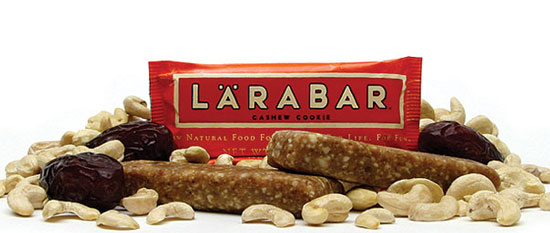
200 calorie Larabar (nut varieties, high protein)
6 0z. coffee with fat free milk

Lunch
Stir fry with tofu, vegetables, brown rice and low sodium soy sauce

Whole fruit

Dinner
Boca burger, whole wheat bread
Sun Chips
Trader Joe’s Omega nut mix (1.6 oz.)
Whole fruit

I’ve been introducing small portions of chicken into my dinners, typically mixed with vegetables, to increase protein levels. I also add edamame to increase protein. As I’ve said before, it’s really about listening to your body. At this point I believe I have the balance right. Compared to August I have significantly more energy and I am far less stressed. Good results are motivating and the level of effort required to maintain my balance is reasonable enough so that I look forward to my daily workouts.

Fitness equilibrium – what’s your natural weight state?

After four months of focusing carefully on diet and training I believe I have reached my equilibrium point. Based upon my normal workout routines, nutrition choices and portion sizes I have stabilized my weight. Only if I consciously change my diet and/or increase the level of my routine will I further reduce my weight. Now the question is, “What do I really want?” According to the BMI calculators I am in the category of Normal. I have a friend who watches his diet and runs over 40 miles a week and his BMI score is Obese. He sure doesn’t look it.

I don’t have the time to exercise more frequently but I can increase the intensity of my workouts and runs. I should probably do that anyway to increase strength and performance. I could eat less but why? If I eat the same and work out more intently will my weight go up because I’m building more muscle mass? If my weight does increase will I care? Is it worth thinking about everything you eat to maintain a weight that could not be achieved through a healthy diet and normal exercise?

I will benchmark this to see how things go over the next few months with no change in diet but a modest increase in workout effort. I really don’t care about my weight as long as my HDL, LDL, triglyceride and blood pressure levels are normal. Maybe it is time to buy that HRM watch.